Locks of Hair
Human Hair Wig - Yaki Straight Half Wig - Natural Black (1B)
Human Hair Wig - Yaki Straight Half Wig - Natural Black (1B)
Couldn't load pickup availability
Reads Like Your Own Silk Press
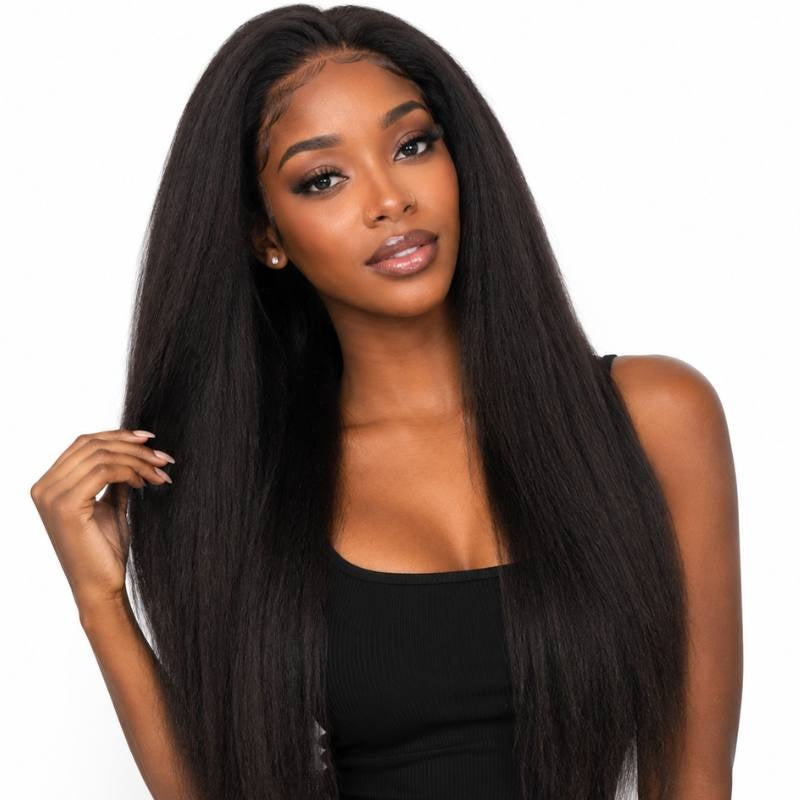
Yaki isn't the glassy, mannequin-slick straight that gives itself away next to real hair. It carries the soft, faintly textured finish you get off a relaxer or a fresh blow-dry, with a bit of body and a matte sheen rather than a mirror slip. On a half wig that matters more than anywhere: the piece reads like the same pressed-out hair you'd wear yourself, so nobody clocks where yours ends and it begins.
Match The Direction, Lose The Seam
A straight blend lives on direction. Press or flat-iron your own leave-out so it lies the same smooth way the yaki does, comb it down over the top, and the two lengths run parallel and read as one head of hair. The join tucks flat into your part because both sides are pointing the same direction, since a curl would scatter it.
A Texture That Drinks Moisture
Smooth hair usually lets sebum travel the strand, but a yaki finish runs a shade drier than glassy silky-straight and shows it first at the ends. A light leave-in or a few drops of oil pulled through the lengths keeps it supple and soft instead of dull and straw-dry.
The Band Does Its Work At The Crown
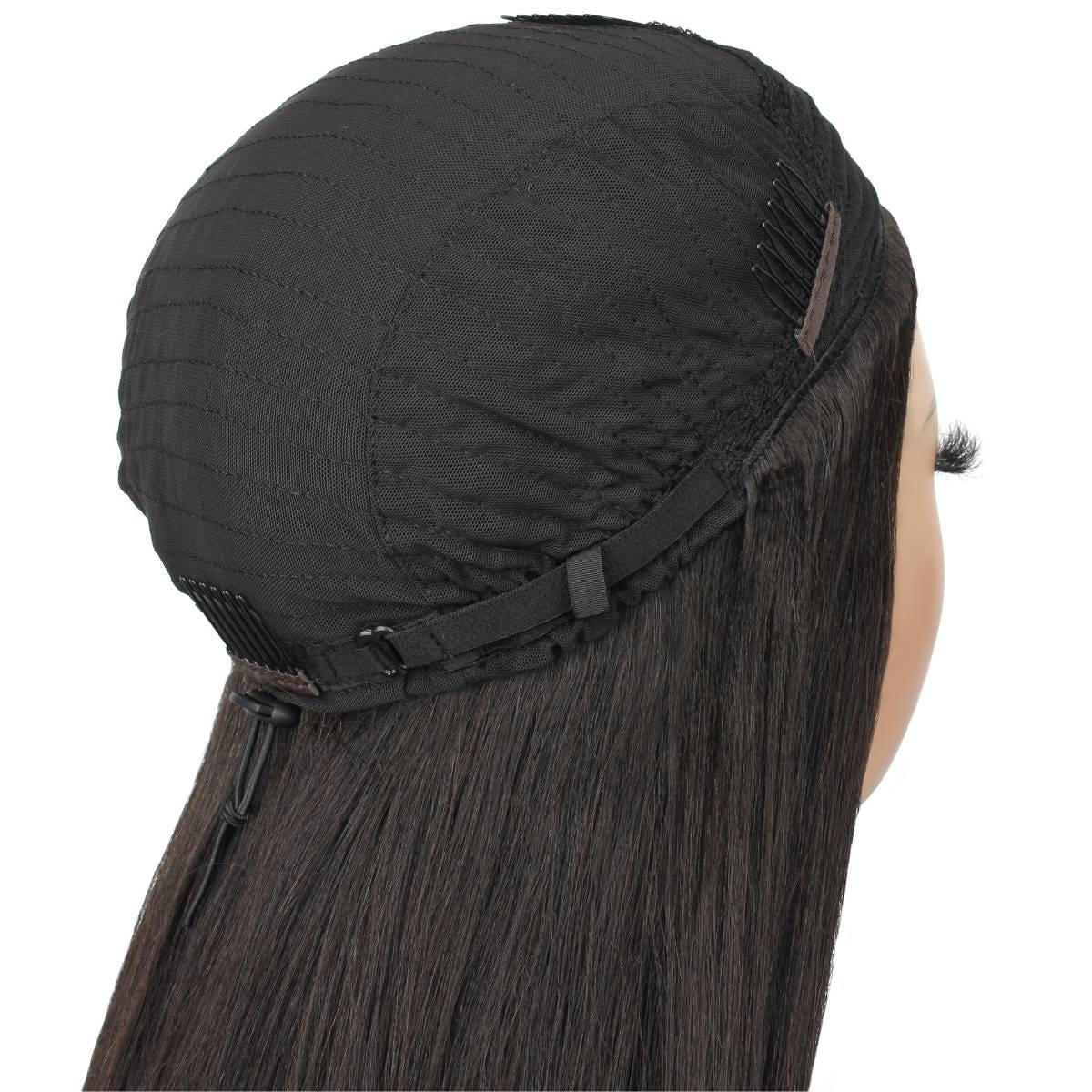
Straight hair carries its weight downward and swings as you move, so the pull is a steady drop rather than a curl piling upward. That's why the tension that keeps this steady sits at the crown, where the combs bite in and the band draws snug. It holds through a full day of that downward swing without a braid, a stitch, or a drop of glue.
150% Density You Can See
At 150% this lays in noticeably fuller than a standard cap, and on a straight texture that fullness shows as clean drop and length off the crown rather than curl mass. Instant body the second the combs are seated, no root powder, no teasing.
Press It, Curl It, Make It Yours
Because it's 100% human hair, a flat iron or a wand behaves on it just like the hair off your head. Heat snaps the hydrogen bonds inside each strand and they lock back as it cools, so a curl or a bump holds once the hair goes fully cold. Run a heat protectant first and treat it like any real human hair you restyle at home.
Matte Surface, Honest Lift
Your 1B base owes its depth to eumelanin sitting in the core of each strand, and the cuticle here is intact, so a colorist can carry it toward honey blonde without it grabbing patchy. On yaki's softer, less glassy surface that lift reads warm and even rather than shiny and hot-spotted. Lightening is a pro's job, so book it or run a strand test first.
A Pressed Look With No Daily Heat On Your Own Hair
A sew-in seals your scalp away for weeks. This does the opposite: it covers the crown and back while your own edges stay out, under no adhesive and no tension, so you can part, oil, and wash on your own schedule and set the piece back after. It's the easiest way to wear a silk-press look every day without taking an iron to your own hair, and it's off before lights-out.
| Feature | Details |
|---|---|
| Hair Type | 100% Human Hair |
| Texture | Yaki Straight |
| Density | 150% Density |
| Construction | Half Wig |
| Attachment | Built-In Combs and Adjustable Band |
| Lace Size | No Lace or Glue Required |
| Color | Natural Black (#1B) |
| Coloring Capability | Can Be Colored Up To Honey Blonde |
| Length | 18", 22" |
| Recommended Use | Beginner-Friendly Installation |
Why Yaki and Not Glass-Straight
Silky straight carries that mirror finish a fresh mannequin wears, and that is exactly what trips up a blend with your own pressed-out hair. Hair you have relaxed or flat-ironed keeps a bit of body and a softer sheen, with no glassy slip, so a too-perfect texture laid against your leave-out tends to announce itself. Yaki is cut to read like that pressed look instead, which is the difference between the join passing as one head of hair and passing as your hair plus a wig.
A Half Wig Keeps Your Scalp Reachable
A sew-in or a glued unit seals everything under a cap for weeks at a stretch. A half wig works the other way. It covers the crown and the back and leaves your own perimeter out, so your edges sit under no adhesive and no tension and your scalp stays within reach. You can part your own hair, oil the scalp, and wash on your own schedule, then set the piece back on after. It behaves more like a long-term protective style you manage day to day than an install you commit to and wait out.
Picking Between 18 and 22 Inches
Here's the mercy of a straight texture: what you measure is what you wear. A coil shrinks and a wave settles up as they dry, but yaki hangs at close to its true length, so the number on the label is the number you get. Eighteen inches falls around the shoulders and keeps things light for a regular day. Twenty-two runs further down for real length and more sway when you want the piece to make a statement. The yaki finish stays soft and pressed-out at either, with no stiffening into a sheet, so your only real question is how much hair you want trailing behind your own.
Share